A Crucial Examination of America's Moral Crisis
ONE FLIGHT DOWN
Slipping Into Homelessness
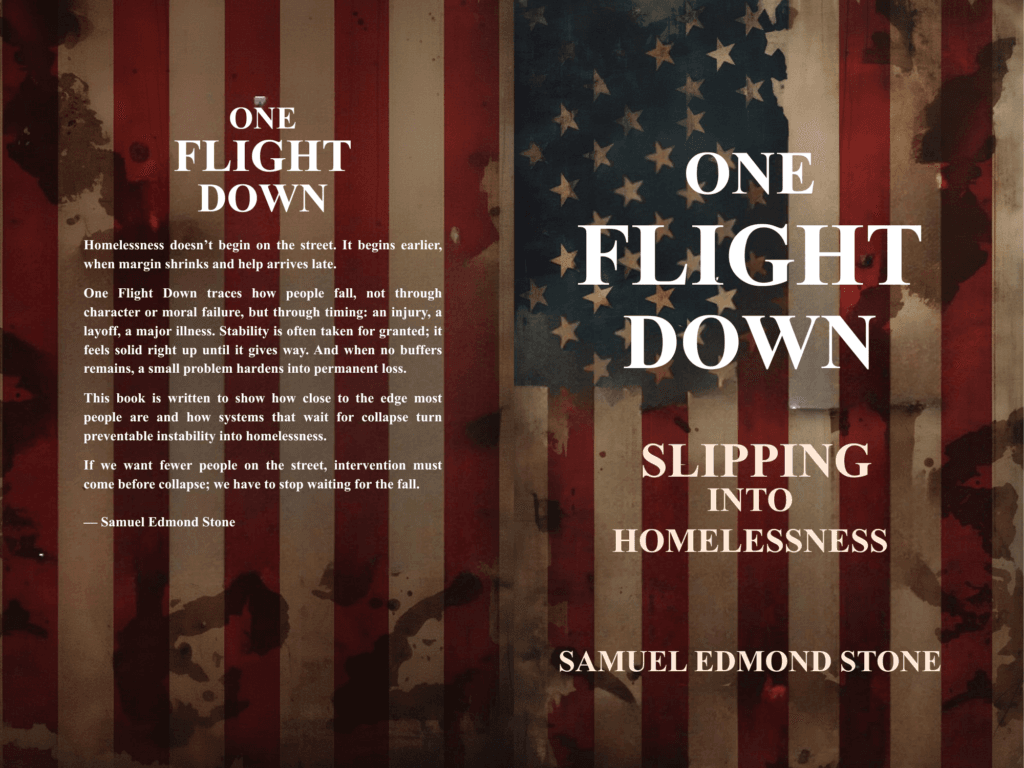
One Flight Down examines homelessness at its earliest and most overlooked stage—before the street, before visibility, before collapse is recognized as crisis. It traces how ordinary lives destabilize not through moral failure, but through shrinking margin, delayed care, and systems structured to respond only after loss becomes permanent. Homelessness, the book argues, is not a sudden fall, but a gradual descent shaped by timing, health disruptions, financial strain, and institutional inertia.
By following the progression from stability to displacement, One Flight Down reveals how small interruptions compound when buffers disappear and assistance moves too slowly. Missed payments, medical events, and administrative delay erode recovery options long before eligibility for help is triggered. As intervention is postponed, temporary instability hardens into permanence, and survival replaces restoration as the system’s unspoken goal.
As these mechanisms come into focus, the book advances a clear conclusion: prevention is both possible and less costly than collapse. What is missing is not resources, but urgency, coordination, and a commitment to intervene before people are forced to fail in order to qualify for care. One Flight Down reframes homelessness as a predictable outcome of delayed responsibility, insisting that dignity, stability, and early intervention are not acts of charity, but essential functions of a system that claims to protect its citizens.